Sell

عربي


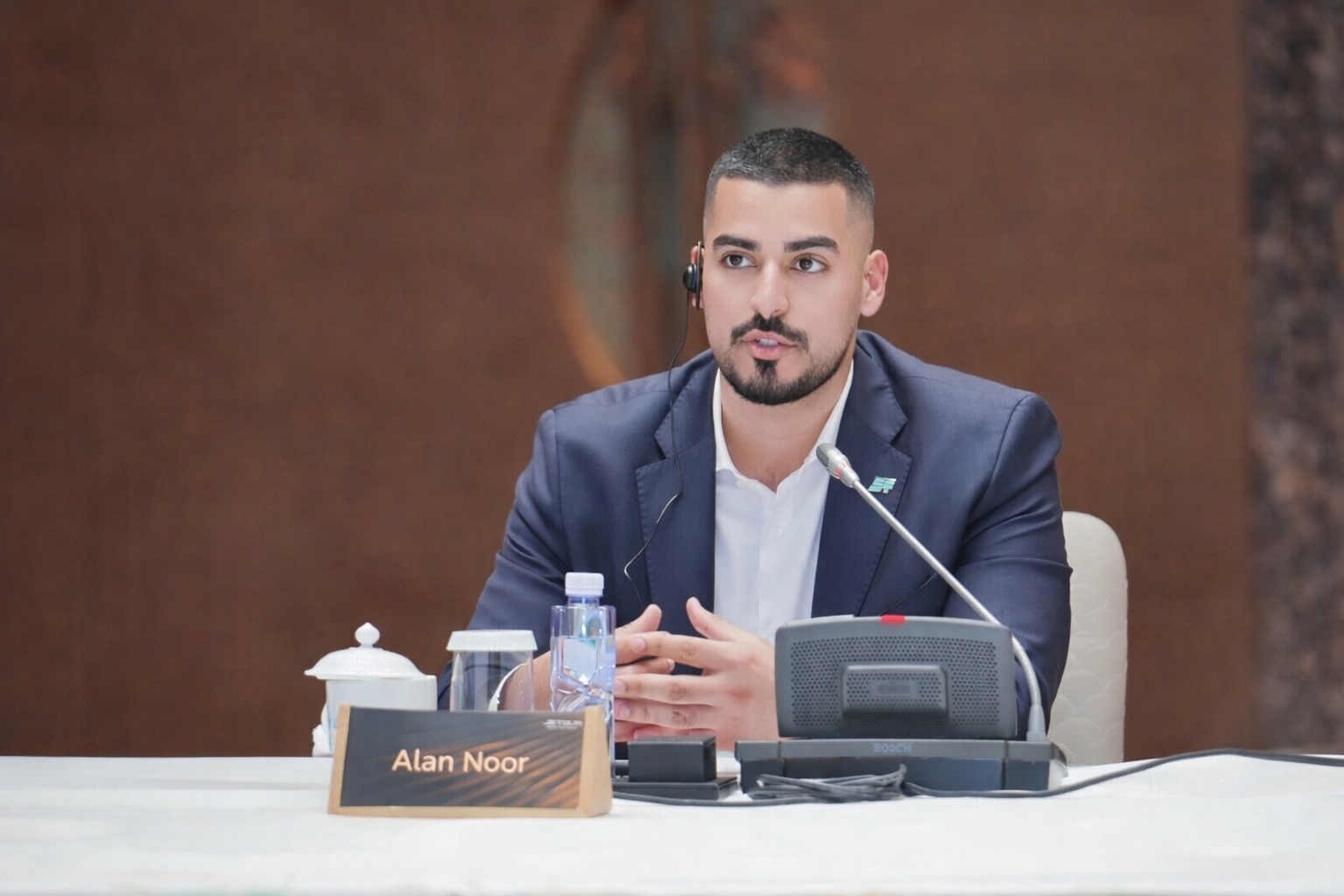
Why Market Leadership in Iraq Is About Infrastructure, Not Price | Alan Noor Interview
 3/5/2026
Iraq’s automotive landscape is entering a decisive phase. With the rapid expansion of Chinese OEMs across the region, questions around sustainability, consolidation, infrastructure depth, and long-term brand value are becoming increasingly important.
In this exclusive executive interview with iQ Cars, Alan Noor, Board Member & Business Development Director of Harlem Group, shares a structural perspective on portfolio strategy, market consolidation, pricing discipline, infrastructure investment, and the future positioning of JETOUR and SOUEAST in Iraq.
This discussion goes beyond product launches and sales figures. It addresses brand architecture, operational readiness, resale value protection, grey-import risks, and the role of real-time market data in shaping strategic decisions.
1. Portfolio Architecture
Question
With both JETOUR and SOUEAST operating under Harlem Group, how would you define your long-term brand architecture strategy? Are these brands positioned as complementary pillars, or are you preparing them to serve differentiated target segments?
Answer
Our strategy with JETOUR and SOUEAST is structured and deliberate, never opportunistic.
Both brands originate from the same factory group and are managed by the same OEM leadership team. However, each brand carries a clearly defined positioning.
JETOUR operates under the Travel + SUV philosophy, combining lifestyle mobility, long-distance comfort, off-road capability, and now a strong push into Plug-in Hybrid off-road vehicles. The global ambition of the brand is to become the number one hybrid off-road brand.
SOUEAST, meanwhile, focuses on the modern urban consumer highly tech-oriented, design-conscious, and convenience-driven embodied in its slogan “Ease Your Life.”
They are complementary verticals, not overlapping competitors.
This portfolio clarity reflects Harlem Group’s approach since 1995. We build ecosystems and long-term brand structures, not short-cycle market plays.
By growing and establishing these brands in parallel, we expand our customer reach while continuing to build on the strong group foundations that we have developed over the past decades.
2. The Chinese Wave
Question
Iraq is experiencing a rapid influx of Chinese automotive brands. From your perspective, can the market sustainably absorb this volume, or are we moving toward consolidation?
Answer
We are clearly heading toward consolidation.
Short term, the market can absorb new entrants. Medium to long term, only those with infrastructure, OEM commitment, and serious operational systems will remain.
Iraq is not just a price market. It is built on:
• Durability
• Resale value
• Service reliability
• Brand trust
Over the next 3–5 years, weaker brands will exit.
From a customer perspective, this period requires discernment. Buyers should not look only at price or features; they should examine the background of the brand itself. Is it backed by a major industrial group in China? Does it have a proven domestic footprint? Is there long-term OEM commitment?
With the sheer number of Chinese brands entering regional markets, the reality is that only a limited number are backed by strong, established manufacturers with deep infrastructure and a proud history. Those are the brands that will endure.
Harlem Group invests only long term. We are positioning JETOUR and SOUEAST for leadership after consolidation, not temporary participation.
3. Speed vs. Stability
Question
Chinese OEMs move quickly — with frequent model launches, facelifts, and technology upgrades. How does Harlem Group balance speed-to-market with operational stability and after-sales readiness?
Answer
Speed without systems creates instability. Our principle is clear: No launch without backend readiness.
Each model rollout is supported by:
• Pre-stocked spare parts
• Trained and certified technical teams
• Diagnostic tooling
• Structured PDI procedures
• Resident Chinese technical engineers from JETOUR and SOUEAST based in Iraq, working directly within our service centers to provide immediate OEM-level support when required
We operate two state-of-the-art stockyards, each exceeding 200,000 sqm, designed for:
• Structured PDI and inspection lanes
• Controlled inventory rotation
• Massive spare parts storage hangars
• Dedicated accessory zones
Sales and after-sales go hand in hand. This is a principle we understood from the beginning, and it is a key reason our group has sustained leadership for decades.
We have the capability to adapt quickly, shift strategy when needed, and remain aligned with the fast-paced automotive technology industry.
4. Brand Trust Equation
Question
In Iraq, trust is often built through durability and resale value. How are JETOUR and SOUEAST being positioned to strengthen long-term brand equity rather than short-term sales spikes?
Answer
Trust is built after delivery, not at the launch event. From the beginning, our focus has been:
• Correct and competitive pricing
• Protecting resale value
• Infrastructure depth
• Consistent service quality
• Strong owner community building
We experienced overwhelming demand across approximately all models we introduced to the Iraqi market. In multiple instances, units were fully booked by customers while still en route to Iraq, making arrival purely a distribution process to confirmed buyers rather than sales generation.
Across the majority of our model debuts, we have observed a consistent pattern: vehicles initially trade in the secondary market above our official distributor MSRP. This reflects genuine demand strength and strong buyer confidence.
One live example is the G700, which is currently experiencing exceptional traction and maintains a customer waiting list exceeding 3,000 buyers.
This is not temporary hype. It is sustained brand trust built through disciplined pricing, resale value protection, and long-term operational commitment.
5. Network Depth & 2026 Expansion
Question
Distribution in Iraq extends beyond showroom presence — it requires parts availability, service reach, and operational depth. What structural investments has Harlem Group made to ensure scalability beyond initial demand cycles?
Answer
Infrastructure, particularly after-sales, is Harlem Group’s strongest competitive advantage.
Showrooms create visibility. Service and spare parts create sustainability. Our strategy has been consistent: build backend strength first, then scale front-end expansion.
After-Sales & Spare Parts Infrastructure
Today, we operate service centers and spare parts outlets across:
Baghdad, Erbil, Kirkuk, Duhok, Sulaymaniyah, and Najaf.
Our after-sales framework includes:
• Advanced spare parts warehousing supported by structured forecasting systems
• Strong stock depth to minimize lead times and reduce vehicle downtime
• Continuous OEM technical training programs
• The largest joint JETOUR & SOUEAST service center globally
In recognition of this operational discipline, Harlem Group received the 2025 Middle East Award for Best Spare Parts Stock Management & Ordering Performance from JETOUR.
This reflects systems, accuracy, and planning — not simply volume.
2026 After-Sales Expansion
Our service and spare parts network will expand into:
Basrah, Babel, Mosul, Al Anbar, and a second major service hub in Baghdad, alongside the launch of a Mobile Workshop Program providing certified technical support directly at customers’ homes.
Showroom Infrastructure & Expansion
On the retail side, our scale is already internationally recognized:
• The largest JETOUR showroom in the Middle East (Erbil), officially awarded “JETOUR 2025 Brand Benchmark Store” by Jetour and Soueast International President Ke Chuandeng
• The largest SOUEAST showroom globally, awarded “SOUEAST 2025 Brand Benchmark Store” by Jetour and Soueast International President Ke Chuandeng
Current showroom network:
Baghdad, Erbil, Kirkuk, Duhok, Sulaymaniyah, and Najaf.
2026 Showroom Expansion Plan
Baghdad:
• Second JETOUR flagship showroom
• Second SOUEAST showroom
• Two additional mall-based showrooms
Erbil:
• One additional JETOUR showroom
• One additional SOUEAST showroom
Mosul, Basrah, Al Anbar, Babel, Sulaymaniyah (per city):
• JETOUR showroom
• SOUEAST showroom
Najaf:
• SOUEAST showroom
Duhok:
• SOUEAST showroom
• Expansion of the existing JETOUR showroom
This is synchronized capital deployment across sales, service, and spare parts, ensuring that as demand grows, infrastructure expands ahead of it.
6. Margin Discipline
Question
In a competitive and price-sensitive market, how do you avoid entering a race-to-the-bottom pricing environment while still driving volume?
Answer
From day one, our pricing strategy has been correct and competitive.
We did not enter the market with inflated positioning followed by discounting. We entered with pricing aligned to real and competitive market value from the beginning.
Our core principle is simple:
The value delivered must always exceed the price paid.
This means customers receive stronger specifications, better infrastructure backing, and higher ownership confidence relative to what they invest. When value consistently outweighs price, aggressive discounting becomes unnecessary.
Equally important, we price vehicles in a way that protects resale value from the first day of ownership. A vehicle should not lose credibility the moment it leaves the showroom. By avoiding artificial price inflation and sudden corrections, we maintain secondary market stability and long-term brand equity.
Volume, in our case, is the result of disciplined positioning — not price wars. Our margins reflect long-term brand stewardship. We prioritize sustainability, resale protection, and structured growth over short-term pricing tactics.
7. Consumer Evolution
Question
Are Iraqi buyers becoming more technology-driven in their decision-making, or does price remain the dominant factor?
Answer
Price remains important in Iraq. However, today’s customer is significantly more informed and analytical in their decision-making process.
While price continues to influence purchasing behavior, the younger generation with purchasing power is evaluating overall value for money.
Consumers now expect:
• ADAS safety systems
• Premium, technology-forward interiors
• Strong safety credentials
• Advanced connectivity features
Beyond features, reliability has become critical. Iraqi customers want vehicles that are dependable, durable, and not prone to frequent breakdowns.
JETOUR and SOUEAST have built a reputation for operational stability, supported by structured engineering development and continuous OEM quality control.
On safety, our vehicles achieve 5-star ratings in international NCAP testing programs, in addition to undergoing extensive in-house crash and durability testing conducted by the OEM. This reinforces both structural integrity and long-term reliability.
8. Strategic Risk
Question
What do you see as the biggest risk facing Chinese automotive distributors in Iraq over the next five years?
Answer
The single biggest risk is uncontrolled grey imports.
Grey-imported vehicles often originate from markets where they were priced or supported under specific local policies. When those units are redirected into Iraq, they enter with cost structures that do not reflect the Iraqi market framework.
More importantly, many of these vehicles are not configured in accordance with Iraqi and GSO (Gulf Standards Organization) specifications.
All vehicles supplied through Harlem Group are built from the factory with Iraqi and GSO compliance in mind, including regulatory, environmental, and technical requirements. This ensures proper homologation, long-term serviceability, and parts compatibility.
Grey imports create a major structural problem: brand reputation risk. Customers often cannot distinguish between officially supplied vehicles and grey imports.
If a customer purchases a grey-import unit and experiences technical issues, parts non-availability, or specification mismatches, the brand itself is blamed — when the underlying issue is the distribution channel, not the manufacturer.
Over time, this can unfairly damage the perception of Chinese brands in general.
The solution is not price competition. It is consumer education.
9. Data & Market Intelligence
Question
How important is real-time market data and digital visibility in shaping Harlem Group’s strategy today? To what extent do platforms like iQ Cars contribute to your understanding of pricing dynamics, consumer demand, and competitive positioning in Iraq?
Answer
As the largest automotive marketplace in Iraq, iQ Cars provides valuable transparency into the market by reflecting real-time listings, pricing activity, and consumer interest across different cities and vehicle segments. This scale offers a broad and holistic view of market dynamics.
From our perspective, platforms like iQ Cars help us observe several practical indicators, including general pricing trends across the market, how newly introduced models are trading after launch, and overall resale value patterns in the second-hand market.
They also allow us to monitor how our own newly released models perform beyond the showroom and how our vehicles maintain their resale value in the secondary market.
Maintaining strong resale value is an important part of how we protect our customers’ long-term ownership experience, which is why we closely follow these indicators to ensure our vehicles continue to perform well in the market over time.
10. Long-Term Positioning
Question
In a market where new Chinese brands enter frequently, what will ensure that JETOUR and SOUEAST remain relevant and competitive five years from now?
Answer
Their long-term relevance is built on three structural pillars.
1. OEM Strength, R&D Depth & Design Leadership
JETOUR and SOUEAST are not speculative brands. They are backed by a major industrial OEM with extensive global-scale manufacturing and dedicated R&D centers supporting continuous product evolution.
The majority of their design leadership is driven by internationally renowned automotive designers, including:
• Andrew Collinson (former Land Rover designer)
• Hakan Saracoglu (former Porsche designer of the USD 1M+ 918 Spyder)
• Chris Bangle (former BMW Group design chief)
Under this leadership, the JETOUR T1 won the prestigious German Red Dot Design Award.
From the very beginning of production, both JETOUR and SOUEAST positioned themselves as design-forward brands. The impact was visible early, particularly with the launch of the JETOUR T2, whose boxy, off-road-inspired silhouette generated global attention.
That design direction did not just succeed — it influenced the market. Following the T2’s release and the worldwide buzz it created, many OEMs, both Chinese and non-Chinese, shifted toward similar rugged, squared-off design philosophies. JETOUR did not follow the trend; it helped create it.
Additionally, JETOUR today ranks among the highest-selling Chinese automotive brands internationally, with strong export performance and multi-market penetration. This international scale provides production stability, engineering investment, and long-term sustainability that smaller entrants simply cannot match.
2. Technology & Regional Adaptation
• Balanced ICE and PHEV portfolio strategy
• Continuous technology upgrades aligned with global demand
• Dedicated Middle East regional parts hub in Jebel Ali to ensure supply stability
3. Harlem Group Market Strength
In Iraq, long-term relevance also depends on the strength of the distributor. We are not just a distributor — we are a market shaper.
A tangible example of this brand equity is that Harlem Group logo stickers placed on officially distributed vehicles have been replicated and sold in accessory markets. Customers voluntarily place them on vehicles not purchased through our network. That is not marketing. That is organic brand trust.
Five years from now, relevance will not belong to the newest entrant. It will belong to brands backed by industrial strength, global design leadership, international sales scale, regional infrastructure, and institutional distribution.
JETOUR and SOUEAST are structured for that horizon.
Final Reflection
JETOUR entered Iraq in 2022, and within just three years it has become the highest-selling Chinese SUV brand in Iraq overall.
In 2025 alone, we achieved 62% growth in both sales and market share, making JETOUR the fastest-growing automotive brand in Iraq — a momentum trajectory we have sustained since our market entry.
In the Middle East region, JETOUR recorded 71,799 units across the Middle East in 2025, reinforcing its position as one of the highest-performing Chinese automotive brands internationally.
SOUEAST was officially launched outside China for the first time in Erbil by Harlem Group in 2025. Within its first year, it surpassed multiple established brands in the Iraqi market, reflecting disciplined positioning and rapid brand acceptance.
This growth is not accidental. It is the result of long-term investment, infrastructure scale, operational discipline, and a deep understanding of the Iraqi market.
That structural foundation — not short-term momentum — is what will continue to define our leadership.
Find all SOUEAST and JETOUR cars on www.iqcars.net now!